

The swimming season may be over, but your responsibility for securing the pool never takes a season off.
Once the cover goes on and the patio furniture is stored away, it is easy to stop thinking about the backyard pool. But an unattended pool can still attract neighborhood children, wandering pets, wildlife, and unwanted visitors throughout the fall and winter.
Snow, ice, wind, falling branches, and freezing temperatures can also weaken fence sections and prevent gates from closing or latching properly. That is why closing your pool should include more than winterizing the water and equipment. It should include inspecting the fence that protects it.
Reliable Fence helps homeowners throughout New Haven County, Fairfield County, and surrounding Connecticut communities install and maintain attractive pool fencing designed for safety, security, and dependable year-round performance.
Closing your pool for the season? Let Reliable Fence inspect or upgrade the barrier around it. Call 203-344-7642 or request a free, no-obligation estimate online.
Why Pool Security Still Matters After Summer
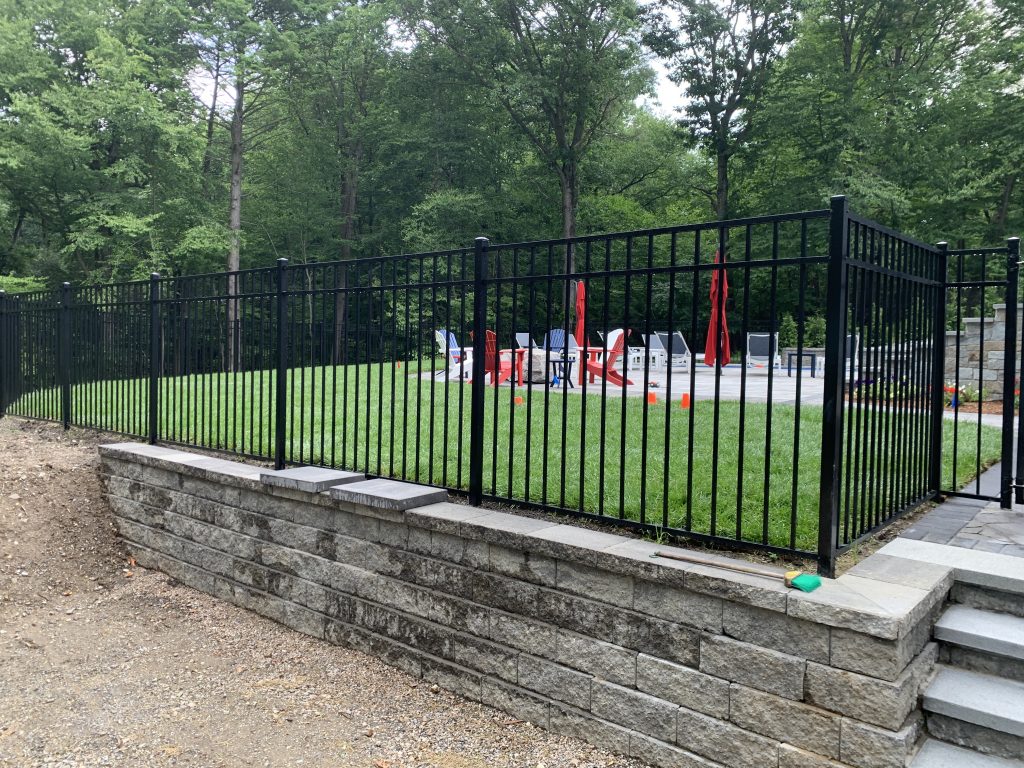
A covered pool is not necessarily a secured pool.
Pool covers vary significantly in strength and purpose. Some are designed primarily to keep leaves and debris out of the water—not to support a person or prevent access. Even a safety-rated cover should not replace a properly designed pool enclosure.
During the off-season, several risks can become easier to overlook:
- Children may enter the yard when no adults are outside.
- Pets can slip through gaps or damaged fence sections.
- Wildlife may be attracted to the covered or partially frozen water.
- Trespassers may assume that an unused backyard is unmonitored.
- Snow and ice can interfere with gate operation.
- Falling limbs and winter storms can damage panels, posts, and hardware.
- A gate that worked correctly in July may no longer latch reliably in January.
Your pool fence is a year-round safety system. It should continue controlling access even when the pool is covered, winterized, or hidden beneath snow.
Closing the Pool for Fall? Don’t Forget Connecticut’s Pool-Barrier Requirements
Connecticut’s currently effective state building code is based on the 2021 International Codes and includes the 2021 International Swimming Pool and Spa Code. State requirements generally call for a pool barrier at least 48 inches high, with openings small enough to prevent the passage of a 4-inch sphere. Pedestrian gates must generally open away from the pool and be self-closing and self-latching.
Those protections do not end on Labor Day. A residential swimming pool must remain protected when it is not being used.
Requirements can depend on the pool, property layout, gate design, access points, and local enforcement. Municipal rules or permit requirements may also apply. Before installing or modifying a pool enclosure, homeowners should confirm the current requirements with their local building department.
Reliable Fence can help you evaluate the practical fencing and gate improvements your property may need. Final code interpretation and approval remain with the applicable local building official. For a deeper look at the rules, see our guide on what Connecticut homeowners should know about pool fence safety.
Start With the Most Important Part: The Pool Gate
A beautiful enclosure cannot provide dependable protection if someone can push the gate open.
Pool gates receive frequent use and contain moving components that can wear, loosen, shift, or become obstructed. As temperatures drop, changing soil conditions, frost, and repeated freezing and thawing can affect posts and gate alignment.
Check whether your gate:
- Closes completely from different open positions
- Latches automatically without being pulled shut
- Opens outward, away from the pool
- Has secure, weather-resistant hinges and hardware
- Cannot be easily operated by a small child
- Has not begun dragging, leaning, or sagging
- Remains clear of leaves, snow, ice, toys, and landscaping
- Cannot be propped open accidentally
Never rely on a reminder to close the gate manually. A properly selected and adjusted self-closing, self-latching gate helps restore the protective boundary every time someone enters or exits.
If your gate hesitates, bounces open, misses the latch, or needs to be lifted into place, arrange for an evaluation before winter makes the problem worse.
Choose a Pool Fence That Remains Visible and Dependable
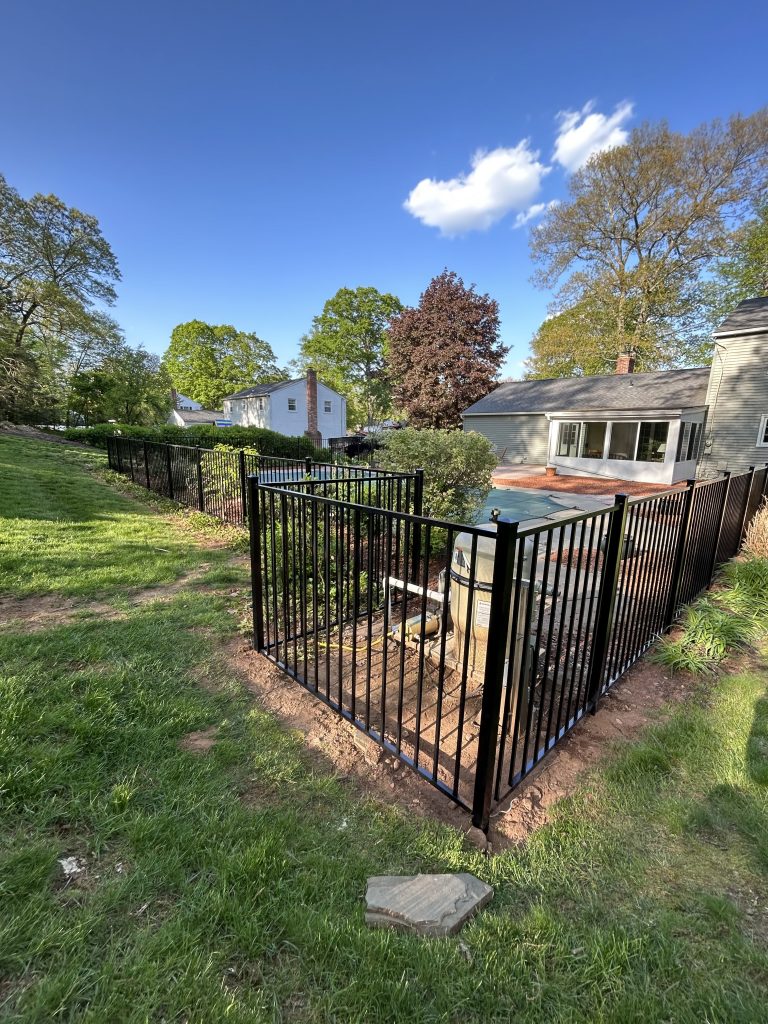
For many Connecticut homes, ornamental aluminum and vinyl are excellent options for a safe, attractive pool enclosure.
Aluminum Pool Fencing
Ornamental aluminum provides an open, elegant appearance that preserves visibility into the pool area. Parents and property owners can see through the enclosure more easily, while the fence establishes a strong physical boundary.
Quality aluminum fencing also offers:
- Clear sightlines around the pool
- Resistance to rust and corrosion
- Low maintenance requirements
- Compatibility with sloped properties
- A clean appearance that complements many Connecticut homes
- Vertical designs that can reduce easy climbing opportunities
Black aluminum is especially effective for many landscapes because it creates a visible boundary without visually overwhelming the yard.
Vinyl Pool Fencing
Vinyl can provide greater privacy while offering a smooth, attractive, low-maintenance surface. Depending on the selected style and layout, vinyl fencing can separate the pool from the remainder of the backyard and make the area less visible from nearby properties or roads.
Benefits can include:
- Increased backyard privacy
- No painting or staining
- Resistance to moisture and insects
- Smooth surfaces without splinters
- A wide selection of styles and colors
- Durable performance through Connecticut’s changing seasons
The right material depends on your property, desired level of visibility, privacy needs, terrain, and local requirements. Reliable Fence will help you compare suitable options instead of forcing your backyard into a one-size-fits-all solution.
Is Your Pool Fence Ready for a Connecticut Winter?
Walk the entire perimeter before the first heavy snowfall. Look closely—not just from the back door.
Inspect Posts and Panels
Push gently against posts and sections to identify movement. Loose posts, leaning panels, damaged rails, and disconnected components can create openings or reduce the enclosure’s stability.
Measure Openings and Ground Clearance
Check for gaps beneath the fence caused by erosion, settling, landscaping changes, or animal activity. Pay particular attention to sloped areas and transitions between different surfaces.
Remove Climbable Objects
Store chairs, planters, pool equipment, ladders, toys, firewood, and other objects away from the outside of the fence. A compliant barrier can become much easier to cross when a movable object provides a step.
Examine Gate Hardware
Test the hinges, latch, fasteners, and gate alignment. Do not wait for ice or accumulated snow to reveal that the gate was already struggling.
Trim Branches and Vegetation
Remove weak limbs that could fall onto the fence. Cut back overgrown shrubs or vines that conceal damage, obstruct the gate, or make sections easier to climb.
Plan for Snow Removal
Avoid piling shoveled or plowed snow against the fence. A deep snowbank can reduce the fence’s effective height, place pressure on the panels, or provide an unintended way over the barrier.
Repair the Fence Before the Ground Freezes
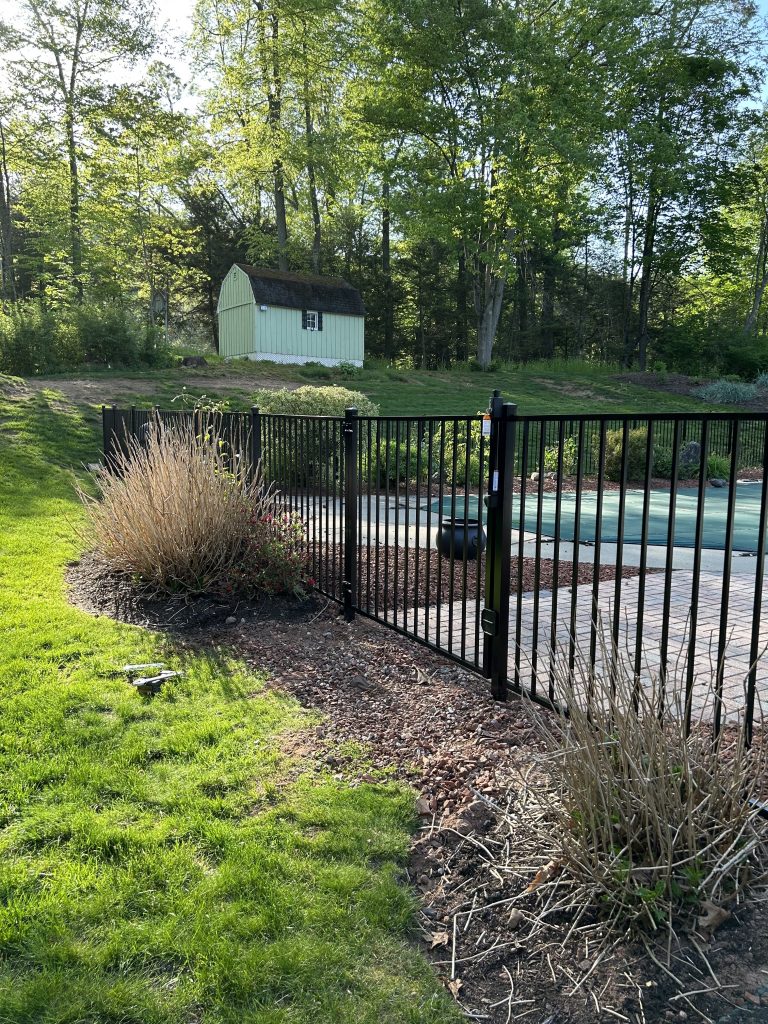
Small fence problems rarely improve on their own.
A loose latch can become a gate that will not close. A leaning post can place stress on adjacent sections. A minor opening beneath a panel can widen after runoff, frost heaving, or animal activity.
Fall is an ideal time to address:
- Gates that do not close or latch automatically
- Rusted, loose, or damaged hardware
- Broken pickets, rails, or panels
- Unstable or leaning posts
- Excessive gaps beneath the enclosure
- Storm or tree damage
- Sections that no longer provide continuous protection
- An aging fence that should be replaced rather than repeatedly repaired
Prompt attention helps protect your family and visitors while reducing the chance of discovering a major problem after the ground freezes.
Does your pool gate need a push, pull, or lift before it latches? That is your warning sign. Call Reliable Fence at 203-344-7642 or submit the estimate form to discuss pool-fence repair, replacement, or installation.
Prevent Access From Beyond the Pool Enclosure
Pool safety begins with the immediate barrier, but the rest of your property matters too.
A secure perimeter fence can discourage unauthorized entry into the backyard. Reliable Fence can design coordinated solutions that address the pool, property boundary, children, pets, privacy, and overall security without making the space feel pieced together.
For households with young children, Reliable Fence’s KidSafe Fencing Solutions focus on creating secure areas for safe outdoor play and separation from hazards such as pools and nearby roads. The company has helped protect Connecticut families since 1967.
Families with dogs can also ask about Pooch Priority fencing, designed around pet containment, gate security, and the animal’s size and behavior. Protecting the people and pets you love has been central to the Reliable Fence approach for nearly six decades.
Don’t Let Security Disappear Beneath the Snow
By midwinter, buried rails, frozen gates, and snow-covered gaps can be difficult to evaluate. Inspecting the enclosure during the fall gives you a clearer view and more time to correct problems.
After every significant storm:
- Check the gate before allowing anyone into the backyard.
- Clear snow and ice without damaging the posts or panels.
- Look for fallen branches and impact damage.
- Confirm that the gate still self-closes and self-latches.
- Keep accumulated snow from creating a step over the fence.
- Arrange professional repairs when the enclosure’s integrity is uncertain.
Do not assume that the pool cover is enough. Layers of snow can obscure the location and condition of the pool, making an intact fence even more important.
Reliable Pool Fencing From a Connecticut Family Business
Since 1967, Reliable Fence has helped Connecticut homeowners protect what matters most. Today, the second-generation, family-owned company combines longstanding craftsmanship with modern fencing products, attentive service, and solutions designed around each property.
Homeowners turn to Reliable Fence for:
- Pool-fence installation and replacement
- Gate and fence repairs
- Ornamental aluminum fencing
- Vinyl fencing
- Wood and chain-link fencing
- Privacy and security solutions
- KidSafe fencing
- Pet-conscious fence planning
- Residential and commercial projects
Whether you need a simple gate adjustment or a complete pool enclosure, you will receive practical recommendations based on your yard, priorities, and preferred style.
Secure Your Pool Before Winter Arrives
Closing the pool is not the end of pool safety—it is the beginning of the longest period your pool may sit unattended.
This fall, take a few minutes to walk the perimeter, test the gate, examine the hardware, and look for openings or damage. If something does not appear secure, let an experienced Connecticut fence contractor help you address it before snow and freezing temperatures arrive.
Let Reliable Fence It!
Call 203-344-7642 or complete the online form to request your free, no-obligation pool-fence estimate in New Haven County, Fairfield County, or a surrounding Connecticut community.
Frequently Asked Questions About Connecticut Pool Fencing
Does my pool fence still need to comply after the pool is closed?
Yes. Closing or covering a pool does not eliminate the need to restrict access. A pool barrier should remain secure and functional throughout the fall and winter, even when no one plans to swim.
How high does a residential pool fence need to be in Connecticut?
Connecticut’s statewide requirements generally establish a minimum pool-barrier height of 48 inches, measured on the side facing away from the pool. The complete rules also address openings, ground clearance, gates, latches, and climbability. Check with your municipal building department before installing or altering an enclosure because the property and local requirements may affect approval.
Does a Connecticut pool gate need to be self-closing and self-latching?
Pedestrian access gates generally must be self-closing and self-latching and open outward, away from the pool. Gate configuration and latch placement must also meet applicable requirements. Your local building official can confirm the rules for your project.
Is a pool cover a substitute for a fence?
Homeowners should not assume that a pool cover replaces the required barrier. Covers differ in design and load capacity, and many are intended only for winterization or debris control. Confirm any proposed alternative protection with your local building department.
Is aluminum or vinyl better for a pool fence?
Aluminum is often preferred when homeowners want clear sightlines, an ornamental appearance, and low maintenance. Vinyl can be an excellent choice when privacy is a higher priority. Reliable Fence can recommend an appropriate code-conscious style based on your property, terrain, visibility, and security goals.
What should I do if my pool gate does not latch automatically?
Stop treating the gate as dependable protection and arrange for service promptly. The problem may involve hinge tension, latch positioning, post movement, worn hardware, or gate alignment. Do not prop the gate open or rely on family members to close it manually.
Can snow create a pool-fence safety problem?
Yes. Accumulated snow can obstruct a gate, place pressure against panels, conceal damage, or reduce the effective height of the barrier. Keep snowbanks away from the enclosure and test the gate after major winter storms.
Can Reliable Fence repair an existing pool enclosure?
Reliable Fence provides professional fence installation and repair. Depending on the enclosure’s material, age, condition, and layout, repair may be practical—or replacement may provide a safer and more lasting solution. An on-site evaluation can determine the appropriate next step.